Showing posts with label Tricks. Show all posts

October 20, 2015

The No-Bullshit, $50 Camper Conversion

Another DBR Series – Dirtbag Mobile Article

I keep reading articles (click-bait?) all over the Internet on “How to turn your vehicle into the ultimate camping machine”, only to end up being told I need a $1,500 solar inverter, a $20,000 trailer, a $1,500 roof rack - cargo box combo and a $300 espresso hand-pump. Seriously?!

This is bullshit.

You can turn almost any vehicle into a DirtbagMobile for almost no money. All you need is a flat surface, a sleeping pad and a sleeping bag, really. But if you do have a couple dollars to spend, you can increase your comfort and your experience significantly, and turn your DirtbagMobile into an almost-permanent home-on-wheels. Here’s what you need:

A good platform
Whether your vehicle already offers a 6-foot+ flat surface or not, what you really want is a slightly-elevated platform to put your mattress on. Why? Because you’ll have storage space underneath that’s out of the way for moving around. Figure out the shape your platform needs to be (most vehicles don’t have a flat space, so you’ll need to build your platform to custom-fit the floor. Invest the time to do this right, you’ll thank me for it), then find some containers (milk crates, plastic bins, whatever) that fit the space and build your platform supports so you can slide out those containers when you need them. Boom! You just doubled your available space!


A jet stove

All those fold-out, double-burner piezoelectric rigs are awesome, but they are usually pretty pricey and bulky. A simple, $20 jet stove will work just fine for all your cooking needs, from your morning coffee to your elaborate Mexican late-night chili :) Bonus! The jet stove gas cans are smaller, lighter and usually last longer than your typical Coleman green propane canisters. Extra bonus! A jet stove set on medium burn will warm up your entire vehicle on a chilly morning in only a couple of minutes.


http://www.amazon.com/Battery-powered-Wireless-Night-Light-Stick/dp/B00KD3BRIS/ref=sr_1_3?s=hi&ie=UTF8&qid=1445353049&sr=1-3&keywords=LED+battery+puck+light
LED lighting + Charging power
You don’t need an inverter or a solar rig to enjoy Dirtbag camping. All you need, really, is light and some charging power for your small electronics. Your first need will be met by getting any $5 multi-LED “puck” light and velcroing it to your car’s ceiling. These lights require almost no power to run and will last several weeks (if not months) on a single battery pack. Your electronics can be charged when the engine is running (say, like when driving in-between camping spots) by using a simple cigarette-lighter USB power outlet ($5), or you can get fancy and buy yourself a spiffy solar-powered charger for about $75-100.
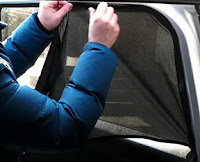
http://www.instructables.com/id/Homemade-Camper-Van%3a-Simple%2c-Easy-Curtains/

Privacy

20$ should buy you a cheap windshield sunshade and enough fabric to cut out to your windows’ shape and make curtains. You can use Velcro or suction cups to hold everything in place. The thicker and snugger the fabric, the stealthier you can be while camping where you shouldn’t :)


http://www.amazon.com/VonShef-Italian-Espresso-Coffee-Macchinetta/dp/B00DYV4J18/ref=sr_1_13?ie=UTF8&qid=1445353137&sr=8-13&keywords=bialetti+espresso+maker
Fancy coffee
The Italians knew long before any of us that great coffee is a critical part of every adventure. So to the great benefit of the whole of humanity, they invented the Bialetti espresso maker, which requires nothing but any source of heat to work. Since this immensely clever system uses the pressure built from the heat to push the steamed water through the coffee grinds, there are no pumps, mechanical parts or anything fancy that can break. Oh! And did I mention the machine costs about $20?


Cold stuff
First of all, learn to be a real Dirtbag and drink room-temperature beer ;) OK, OK, some of you drink milk or carry food items that need to stay cold, fair enough. Unless you are going out in the bush for weeks on end without any contact with civilization (in which case you will need that fancy electric rig and a multi-hundred-dollar mini-fridge) you’ll do just fine with any respectable cooler and a bunch of ice, or a couple frozen water bottles. Bonus! Beer cans set in water will always be several degrees cooler than the ambient air. Extra bonus! Creeks and rivers are excellent natural fridges if you have some sort of net and a tether.


http://www.walmart.com/ip/Jeep-Backseat-Organizer/33688298
Seat organizers + storage
You’re not crafty enough to build custom-fit storage for your vehicle? You can get seat organizers with multiple pockets and even fold-out shelves for about $15 a piece. You just hang them on the back of your front seats and add significant space to pack extra thingies like lighters, cutlery, dishes, a cantine or trail gear. Bonus! Use cargo nets to create storage space under the ceiling, using the grab rails as hookups. Extra bonus! Go around all the storage space your vehicle already has (door pockets, glove compartment, cup holders, console, visors, etc.) and use it to fit a lot of your small items and ensure they are always in reach, and where they should be.


Final shopping list

Assuming you’re starting from absolute scratch:

  • Wood and hardware for your platform: Free – up to $100
  • Jet stove: $20
  • LED Lighting + Power: $5 – up to $100
  • Privacy: $20
  • Fancy coffee: $20
  • Cold stuff: Free – up to $50
  • Storage: Free – up to $50

Total – On the cheap : $65
Total – Get fancy! : $350 - $500

So even if you had nothing to start with, with a little creativity you can build your own DirtbagMobile for about $50 if you use this shortlist, and enjoy several years of adventure before needing to upgrade your gear, if ever. So now, there is really nothing holding you back from going out on an adventure in your spiffy camping machine and enjoy the Dirtbag lifestyle!


September 18, 2015

DBR Series - Dirtbag Mobile : Dirtbaggify!

Dirtbagging in an upstate NY forest
In a previous article in this series, I explained how the Honda Element makes for one of the best Dirtbag vehicles with its versatility, fuel economy and urban-friendly compact size. Today, we will look at a number of fairly easy modifications and add-ons you can do to an Element to turn it into a pretty awesome little camping machine :)

If you're going to spend significant time in your "E", you're going to want to optimize the available space. For a couple hundred dollars (price ranges include getting used parts off of Craigslist), you can add the following accessories, which will yield sizeable benefits :


A roof rack ($150-$300)

The roof of your "E" comes equipped with 4 built-in slots to bolt a roof rack. Whether you get a genuine Honda brand or a thrid-party such as Thule, you will need the Element-specific towers to connect the rack to your roof. Mounting is very easy.

A rooftop container ($50-$200)
You have options here. If you're looking to save some money, opt for a rooftop cargo basket, which bolts on your rack. Remember to try and get one that has a wind deflector, not so much for fuel economy but for wind noise reduction. If you still have a couple bucks, you can buy a cargo bag to put your gear into and protect it from the... elements? If you have more money, get a rooftop box. Best brands include Thule, Sportrack and Rhyno. They are waterproof, lockable and very easy to work with.

Hitch receiver with
cargo basket attached
A hitch receiver ($100-$200)
Probably the best way to add functionality to your "E", a hitch receiver will allow you to tow a trailer or small camper, but also to attach various accessories to it to create more carrying capacity. Such accessories include a cargo carrier and a bike rack. A little advice : get a 2-inch if possible, it's sturdier. Also, if you live up north, have your receiver (and the rest of your truck, while you're at it) rustproofed. It's a clever investment!

Air deflectors ($150 for a full kit)
Deflectors will help in many ways. The hood part will help rocks and debris fly up and avoid your windshield, as well as prevent paint chipping that leads to rust. Front window deflectors will allow you to crack the windows open even when driving in the rain. Back window deflectors will allow you to pop them open for the night, creating a nice cool breeze when combined with your moonroof. Another tip : Make sure the back window kit is deep enough to allow your windows to pop-out; some cheap versions have an issue with this.)


An LED interior light kit ($20)
Camping out in the "E" means moving around the vehicle, and possibly wanting to use some of the dome lights. However, the regular bulbs can drain the battery and kill it if you're not careful. LED lights consume almost no power and are much brighter than the original bulbs. At about $20 for a kit on eBay, it's a no-brainer!

A windshield sun shade ($2-$10)
Offers privacy and keeps the interior cooler when the early morning sun beats down on your sleepy head! While you're at it, get a second one and cut it to fit your hatch window. I find that the best ones have suction cups to keep them in place. Tip : Flip down your sun visors to hold the windshield sun shade in place.

A solar charger ($50-$200)
These little things are useful! Just let it sit in daylight (it even works through your windshield) for some hours and get some free energy from the sun to power up your electronics. The best models include a USB charging port that you can use while the engine is on for a faster recharge.

A USB-powered fan ($10)
You can find those in dollar stores or in hardware shops. Used in combination with a solar charger, these little fans can provide a much-welcome breeze for those hot evenings when cracking windows open won't be enough to cool you down. They draw very little power, so they will go on for hours on a single charge.

Why is there no mention of the Element tent?
Glad you asked. I purchased one myself, for a sizeable amount of cash (I got it for a good price and still paid $175 - New ones could be as steep as $300) and used it a couple times, only to realize that they are poorly designed. When used in the rain, the water will drip from your roof into the hatch channel and tailgate, accumulating in the bottom part of the tent... creating a nice little lake :( The fabric isn't very good either; if beaten upon by heavy rain, it will "sweat" and make everything wet inside your "E". Finally, the back "window" is a terrible design, as the protective curtain rolls down from the inside instead of the outside, offering very little protection against rain and even wind. Unless you want to use it as a beach shade, it's not worth your money.

This list could go on and on, but I think the items mentioned above are the best accessories you can get for your money, and for your comfort on the road. Feel free to add your own favorites in the comments section!

Next up, how to turn your "E" into a surprisingly comfortable micro-camper :)


February 3, 2015

10 Reasons To Run in Winter

If you're anything like me, you don't deal with cold a single bit. I often say I'm a Mexican, born in the wrong country. I love deserts, big radiating sunshine and green forest trails. The fact is, I pretty much hate winter.

Over recent years, however, I discovered that my love for running outweights my adverse feelings for the cold season. I'll even admit that, under the right circumstances, I almost enjoy some good snowy trails... granted I take the following in consideration :

1. It's awesome training
Snow rarely packs hard enough to completely hold your weight, which means your feet are going to sink and twist at every step, which makes for excellent stability training and a tougher body altogether.

2. There's hardly anyone
You'll pretty much have the trails to yourself. The woods are silent, still and calm, which offers great opportunities for introspection and relaxation. Aside from the crispy sound of your own steps and the occasional jumpy little squirrel, it's you and Mother Nature and there's something powerful about that.

3. You don't need to drink so much
Cold weather, for some reason, seems to repress your need to drink. I probably hydrate 1/10th compared to summer running, without any adverse effects. Consequently, I usually go out with a single handheld bottle and it largely suffices to my needs.

4. You won't be cold, really
Anyone who lives in a cold country knows that we get miserable mostly when we underdress for the conditions. A pair of jeans in -20F simply cannot keep you warm. Multiple layers of running gear, however, are actually way warmer than the usual stuff we wear. When it gets really cold, I put on two pairs of socks, two layers of tights and a pair of shorts, a compression t-shirt with arm sleeves, a Polartech long-sleeve shirt, plus a base layer jacket and a windbreaker. I have a face mask, a buff for my neck and at least one hat. If I go out and start moving immediately, the cold doesn't even come through. And don't believe anyone telling you that you should be careful not to overdress because you'll get too hot. This is abysmal bullshit.

5. It's good for your form
Winter slips and slides, there's ice and loose snow and all sorts of variations on the trail. Therefore, you simply can't have a long stride unless you want to end up on crotches. The conditions pretty much force you to shorten your stride and to take quick, close-together steps in order to keep your balance. That's awesome news, because this teaches - or reminds - you proper running form.

6. It's a whole new challenge
Snow, ice and everything in between react very differently under your feet than, say packed dirt or sand. Winter dramatically changes your workouts by adding some sinking and sliding and it will add some new challenges to your every day runs, particularly when dealing with downhills. It requires another level of awareness and offers a welcome change in pace. Embrace it!

7. You're burning way more calories
When your body fights the cold, your metabolism shifts in high gear and you burn more calories per hour than you would in mild conditions. Add some harder winter running to that mix and you get a potent, high-demand workout that will burn insane amounts of calories for about the same level of effort as your summer runs. Ain't that a nice bonus?

8. It's gentle on the body
A couple inches of snow will efficiently cover up the gnarly parts of the trail and change it to a soft, smooth single-track path that is gentle on your legs and offers reduced "bounce", making for a very cushioned, comfortable ride.

9. Taking a spill isn't an issue
Running rocky, gnarly trails and falling will hurt you pretty badly. Although we rarely shy away from a bloody shin or a bruised arm, it's nice to know that falling, rolling and overall loosing your shit in winter will very rarely even leave a mark. You'll have a good laugh, get back up, shake off the snow and get going again, unscathed.

10. You'll feel like a badass
It's actually way more than a feeling. It's an absolute fact. Being out there on the trails while some cars won't even start, coming back home with ice hanging from your eyebrows and lashes is 100% pure, total badass!

So go on, give it a try. I'm sure you'll find it's better than staying inside, depressed, dreaming about the summer trails and being grossly miserable :)


August 27, 2013

5 Trail Running Safety Tips

El Capitan at the trail head.
Notice the white paper on the sun shade;
it says the number of runners,
the name of the trail(s) and gives
an expected time of return.
Like every runner, I get very excited when I think about going out on a new trail. It is one of the best adventures, as I never know what I’m going to get, where I’m going to go and what wonders I will see. So, of course, I jump at every occasion to venture out in new places.

When my friend Micah disappeared in the Gila wilderness, the worst of the wait was to imagine him out there, probably badly injured, shivering to death in his running shorts and t-shirt at the bottom of some cliff or ravine. Even if it turned out that he suffered a heart attack and died almost instantly – and, thankfully, painlessly – I will never forget how powerless and desperate I felt at the idea that he was lost, somewhere, with only the clothes on his back.

Since that day, I’ve never hit a trail without carrying at least some safety equipment and taking some basic measures in case something goes wrong. I’m not necessarily talking about my weekly run at the local park where I know other runners and hikers will be out there and professional aid is available close by. Although it’s not a bad idea to always have some safety, I am also a runner and I’m not going to burden myself if I don’t need to. But every time I go out on a run in a more remote area, alone, or on a new trail, I always take the following precautions.

1. Emergency survival
If you’re going to take only one piece of safety advice from this post, take this one. Bring a survival kit with you. It doesn’t need to be big and bulky and there are some very good products out there for minimalists like us runners. Your kit needs to have at least a safety blanket, and I recommend having the sleeping-bag type which will keep you way warmer. You also want some matches, or a lighter, or at least some fire starter. Duct tape is a must and takes almost no space; you can even roll it on a small pen or your tube of electrolyte tablets. Extras can include an ultra-light knife, first-aid material, water purifying gear or tablets, a signaling mirror and a high-pitch whistle.

2. Leave a trace
Tell someone where you’re going and for how long. If you just don’t know, say it anyway. “I’m going to go wander around the Mesa Trail” is way better than no information at all. You have no one to say it to? Post it on Facebook or Twitter. Your running friends will be happy to know you’re out and they will know where you went. When you get to the trail head, leave a paper on your windshield saying the time you left, the direction you took and the time you expect to be back. It takes about a minute to do, will make any search & rescue attempt easier and could save your life.

3. Be ready to face the cold
Even in the warmest areas, it gets cold at night. Should you be stranded somewhere after the sun sets, it will get cold and you will suffer hypothermia. Also realize that the clothes you run in will be drenched in sweat, hence completely useless if you need to stay warm. Bring a pair of arm warmers, a light rainproof jacket and a Buff. These three items will fit any running backpack, vest or even waist pack, and they weight next to nothing. If you want extra safety, add a pair of lightweight pants or tights.

4. Pack food and drinks
You already know that you need to fuel on the run. Make sure you bring extra food when exploring a new area, and never keep going past your last third of fluids. Getting dehydrated and / or starved on the trail will have you struggling over obstacles you usually fly over. And if you get stranded or lost, you will be happy to have the extra fuel at hand. You might also have to deal with running partners who didn’t bring or forgot their own fuel, and save their butts :)

5. Mark your way
If you’re running a trail for the first time, more so in remote areas, and come at a trail crossing, stop and look. If the trails are marked, make sure you follow the right one. If they aren’t, pick a couple rocks or some sticks and shape an arrow on the ground. You can choose to make it point forward or back, just make sure you are consistent. Tracing the arrow on the ground is an option, but it’s not ideal as rain or even wind could erase them. Even if you have a GPS, these little markings could become very useful if you run out of batteries or have a breakdown. Of course, remove your arrows on your way out.

These five little things could make a difference if you get in trouble. They are not complicated and constitute healthy habits to take when you go out on an adventure. I hope you never need to spend a cold night on the trails, injured, but if you do, you’ll be happy you were prepared for the situation and will not freak out, alone, suddenly realizing you’re stranded, starving, cold, and no one knows where the hell you went.