Showing posts with label advice. Show all posts

January 20, 2016

Through Light and Darkness


May your life be a road you travel, a path you set yourself on with honesty and a sense of amazement. Its twists and turns, hills up and down, reminding you that it’s not the destination you’re looking for, but the journey itself.

May your hardships serve as powerful teachers of humility and determination, delivering empathy and kindness for your fellow Humans and creating an almost overwhelming propension to help others, reach out and share the difficulties we all face.

May the solace you provide others be reflected upon you in times of loneliness, loss or despair, reminding you of the bond of kinship which unites us all and makes us larger than the sum of our individual parts.

May you gain strength and courage in the form of quietness and non-violence, inspiring others to explore paths of non-confrontation and dialogue, even in the hardest of situations. Let the wrinkles on your face and the scars on your heart bear witness to a life of seeking betterment in all things.

May your body and your soul reflect each other in health, clarity and openness.

We are Humans.

We are seekers.

We are One.


October 20, 2015

The No-Bullshit, $50 Camper Conversion

Another DBR Series – Dirtbag Mobile Article

I keep reading articles (click-bait?) all over the Internet on “How to turn your vehicle into the ultimate camping machine”, only to end up being told I need a $1,500 solar inverter, a $20,000 trailer, a $1,500 roof rack - cargo box combo and a $300 espresso hand-pump. Seriously?!

This is bullshit.

You can turn almost any vehicle into a DirtbagMobile for almost no money. All you need is a flat surface, a sleeping pad and a sleeping bag, really. But if you do have a couple dollars to spend, you can increase your comfort and your experience significantly, and turn your DirtbagMobile into an almost-permanent home-on-wheels. Here’s what you need:

A good platform
Whether your vehicle already offers a 6-foot+ flat surface or not, what you really want is a slightly-elevated platform to put your mattress on. Why? Because you’ll have storage space underneath that’s out of the way for moving around. Figure out the shape your platform needs to be (most vehicles don’t have a flat space, so you’ll need to build your platform to custom-fit the floor. Invest the time to do this right, you’ll thank me for it), then find some containers (milk crates, plastic bins, whatever) that fit the space and build your platform supports so you can slide out those containers when you need them. Boom! You just doubled your available space!


A jet stove

All those fold-out, double-burner piezoelectric rigs are awesome, but they are usually pretty pricey and bulky. A simple, $20 jet stove will work just fine for all your cooking needs, from your morning coffee to your elaborate Mexican late-night chili :) Bonus! The jet stove gas cans are smaller, lighter and usually last longer than your typical Coleman green propane canisters. Extra bonus! A jet stove set on medium burn will warm up your entire vehicle on a chilly morning in only a couple of minutes.


http://www.amazon.com/Battery-powered-Wireless-Night-Light-Stick/dp/B00KD3BRIS/ref=sr_1_3?s=hi&ie=UTF8&qid=1445353049&sr=1-3&keywords=LED+battery+puck+light
LED lighting + Charging power
You don’t need an inverter or a solar rig to enjoy Dirtbag camping. All you need, really, is light and some charging power for your small electronics. Your first need will be met by getting any $5 multi-LED “puck” light and velcroing it to your car’s ceiling. These lights require almost no power to run and will last several weeks (if not months) on a single battery pack. Your electronics can be charged when the engine is running (say, like when driving in-between camping spots) by using a simple cigarette-lighter USB power outlet ($5), or you can get fancy and buy yourself a spiffy solar-powered charger for about $75-100.

http://www.instructables.com/id/Homemade-Camper-Van%3a-Simple%2c-Easy-Curtains/

Privacy

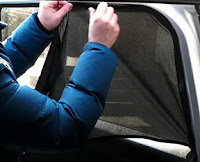
20$ should buy you a cheap windshield sunshade and enough fabric to cut out to your windows’ shape and make curtains. You can use Velcro or suction cups to hold everything in place. The thicker and snugger the fabric, the stealthier you can be while camping where you shouldn’t :)


http://www.amazon.com/VonShef-Italian-Espresso-Coffee-Macchinetta/dp/B00DYV4J18/ref=sr_1_13?ie=UTF8&qid=1445353137&sr=8-13&keywords=bialetti+espresso+maker
Fancy coffee
The Italians knew long before any of us that great coffee is a critical part of every adventure. So to the great benefit of the whole of humanity, they invented the Bialetti espresso maker, which requires nothing but any source of heat to work. Since this immensely clever system uses the pressure built from the heat to push the steamed water through the coffee grinds, there are no pumps, mechanical parts or anything fancy that can break. Oh! And did I mention the machine costs about $20?


Cold stuff
First of all, learn to be a real Dirtbag and drink room-temperature beer ;) OK, OK, some of you drink milk or carry food items that need to stay cold, fair enough. Unless you are going out in the bush for weeks on end without any contact with civilization (in which case you will need that fancy electric rig and a multi-hundred-dollar mini-fridge) you’ll do just fine with any respectable cooler and a bunch of ice, or a couple frozen water bottles. Bonus! Beer cans set in water will always be several degrees cooler than the ambient air. Extra bonus! Creeks and rivers are excellent natural fridges if you have some sort of net and a tether.


http://www.walmart.com/ip/Jeep-Backseat-Organizer/33688298
Seat organizers + storage
You’re not crafty enough to build custom-fit storage for your vehicle? You can get seat organizers with multiple pockets and even fold-out shelves for about $15 a piece. You just hang them on the back of your front seats and add significant space to pack extra thingies like lighters, cutlery, dishes, a cantine or trail gear. Bonus! Use cargo nets to create storage space under the ceiling, using the grab rails as hookups. Extra bonus! Go around all the storage space your vehicle already has (door pockets, glove compartment, cup holders, console, visors, etc.) and use it to fit a lot of your small items and ensure they are always in reach, and where they should be.


Final shopping list

Assuming you’re starting from absolute scratch:

  • Wood and hardware for your platform: Free – up to $100
  • Jet stove: $20
  • LED Lighting + Power: $5 – up to $100
  • Privacy: $20
  • Fancy coffee: $20
  • Cold stuff: Free – up to $50
  • Storage: Free – up to $50

Total – On the cheap : $65
Total – Get fancy! : $350 - $500

So even if you had nothing to start with, with a little creativity you can build your own DirtbagMobile for about $50 if you use this shortlist, and enjoy several years of adventure before needing to upgrade your gear, if ever. So now, there is really nothing holding you back from going out on an adventure in your spiffy camping machine and enjoy the Dirtbag lifestyle!


September 18, 2015

DBR Series - Dirtbag Mobile : Dirtbaggify!

Dirtbagging in an upstate NY forest
In a previous article in this series, I explained how the Honda Element makes for one of the best Dirtbag vehicles with its versatility, fuel economy and urban-friendly compact size. Today, we will look at a number of fairly easy modifications and add-ons you can do to an Element to turn it into a pretty awesome little camping machine :)

If you're going to spend significant time in your "E", you're going to want to optimize the available space. For a couple hundred dollars (price ranges include getting used parts off of Craigslist), you can add the following accessories, which will yield sizeable benefits :


A roof rack ($150-$300)

The roof of your "E" comes equipped with 4 built-in slots to bolt a roof rack. Whether you get a genuine Honda brand or a thrid-party such as Thule, you will need the Element-specific towers to connect the rack to your roof. Mounting is very easy.

A rooftop container ($50-$200)
You have options here. If you're looking to save some money, opt for a rooftop cargo basket, which bolts on your rack. Remember to try and get one that has a wind deflector, not so much for fuel economy but for wind noise reduction. If you still have a couple bucks, you can buy a cargo bag to put your gear into and protect it from the... elements? If you have more money, get a rooftop box. Best brands include Thule, Sportrack and Rhyno. They are waterproof, lockable and very easy to work with.

Hitch receiver with
cargo basket attached
A hitch receiver ($100-$200)
Probably the best way to add functionality to your "E", a hitch receiver will allow you to tow a trailer or small camper, but also to attach various accessories to it to create more carrying capacity. Such accessories include a cargo carrier and a bike rack. A little advice : get a 2-inch if possible, it's sturdier. Also, if you live up north, have your receiver (and the rest of your truck, while you're at it) rustproofed. It's a clever investment!

Air deflectors ($150 for a full kit)
Deflectors will help in many ways. The hood part will help rocks and debris fly up and avoid your windshield, as well as prevent paint chipping that leads to rust. Front window deflectors will allow you to crack the windows open even when driving in the rain. Back window deflectors will allow you to pop them open for the night, creating a nice cool breeze when combined with your moonroof. Another tip : Make sure the back window kit is deep enough to allow your windows to pop-out; some cheap versions have an issue with this.)


An LED interior light kit ($20)
Camping out in the "E" means moving around the vehicle, and possibly wanting to use some of the dome lights. However, the regular bulbs can drain the battery and kill it if you're not careful. LED lights consume almost no power and are much brighter than the original bulbs. At about $20 for a kit on eBay, it's a no-brainer!

A windshield sun shade ($2-$10)
Offers privacy and keeps the interior cooler when the early morning sun beats down on your sleepy head! While you're at it, get a second one and cut it to fit your hatch window. I find that the best ones have suction cups to keep them in place. Tip : Flip down your sun visors to hold the windshield sun shade in place.

A solar charger ($50-$200)
These little things are useful! Just let it sit in daylight (it even works through your windshield) for some hours and get some free energy from the sun to power up your electronics. The best models include a USB charging port that you can use while the engine is on for a faster recharge.

A USB-powered fan ($10)
You can find those in dollar stores or in hardware shops. Used in combination with a solar charger, these little fans can provide a much-welcome breeze for those hot evenings when cracking windows open won't be enough to cool you down. They draw very little power, so they will go on for hours on a single charge.

Why is there no mention of the Element tent?
Glad you asked. I purchased one myself, for a sizeable amount of cash (I got it for a good price and still paid $175 - New ones could be as steep as $300) and used it a couple times, only to realize that they are poorly designed. When used in the rain, the water will drip from your roof into the hatch channel and tailgate, accumulating in the bottom part of the tent... creating a nice little lake :( The fabric isn't very good either; if beaten upon by heavy rain, it will "sweat" and make everything wet inside your "E". Finally, the back "window" is a terrible design, as the protective curtain rolls down from the inside instead of the outside, offering very little protection against rain and even wind. Unless you want to use it as a beach shade, it's not worth your money.

This list could go on and on, but I think the items mentioned above are the best accessories you can get for your money, and for your comfort on the road. Feel free to add your own favorites in the comments section!

Next up, how to turn your "E" into a surprisingly comfortable micro-camper :)


February 3, 2015

10 Reasons To Run in Winter

If you're anything like me, you don't deal with cold a single bit. I often say I'm a Mexican, born in the wrong country. I love deserts, big radiating sunshine and green forest trails. The fact is, I pretty much hate winter.

Over recent years, however, I discovered that my love for running outweights my adverse feelings for the cold season. I'll even admit that, under the right circumstances, I almost enjoy some good snowy trails... granted I take the following in consideration :

1. It's awesome training
Snow rarely packs hard enough to completely hold your weight, which means your feet are going to sink and twist at every step, which makes for excellent stability training and a tougher body altogether.

2. There's hardly anyone
You'll pretty much have the trails to yourself. The woods are silent, still and calm, which offers great opportunities for introspection and relaxation. Aside from the crispy sound of your own steps and the occasional jumpy little squirrel, it's you and Mother Nature and there's something powerful about that.

3. You don't need to drink so much
Cold weather, for some reason, seems to repress your need to drink. I probably hydrate 1/10th compared to summer running, without any adverse effects. Consequently, I usually go out with a single handheld bottle and it largely suffices to my needs.

4. You won't be cold, really
Anyone who lives in a cold country knows that we get miserable mostly when we underdress for the conditions. A pair of jeans in -20F simply cannot keep you warm. Multiple layers of running gear, however, are actually way warmer than the usual stuff we wear. When it gets really cold, I put on two pairs of socks, two layers of tights and a pair of shorts, a compression t-shirt with arm sleeves, a Polartech long-sleeve shirt, plus a base layer jacket and a windbreaker. I have a face mask, a buff for my neck and at least one hat. If I go out and start moving immediately, the cold doesn't even come through. And don't believe anyone telling you that you should be careful not to overdress because you'll get too hot. This is abysmal bullshit.

5. It's good for your form
Winter slips and slides, there's ice and loose snow and all sorts of variations on the trail. Therefore, you simply can't have a long stride unless you want to end up on crotches. The conditions pretty much force you to shorten your stride and to take quick, close-together steps in order to keep your balance. That's awesome news, because this teaches - or reminds - you proper running form.

6. It's a whole new challenge
Snow, ice and everything in between react very differently under your feet than, say packed dirt or sand. Winter dramatically changes your workouts by adding some sinking and sliding and it will add some new challenges to your every day runs, particularly when dealing with downhills. It requires another level of awareness and offers a welcome change in pace. Embrace it!

7. You're burning way more calories
When your body fights the cold, your metabolism shifts in high gear and you burn more calories per hour than you would in mild conditions. Add some harder winter running to that mix and you get a potent, high-demand workout that will burn insane amounts of calories for about the same level of effort as your summer runs. Ain't that a nice bonus?

8. It's gentle on the body
A couple inches of snow will efficiently cover up the gnarly parts of the trail and change it to a soft, smooth single-track path that is gentle on your legs and offers reduced "bounce", making for a very cushioned, comfortable ride.

9. Taking a spill isn't an issue
Running rocky, gnarly trails and falling will hurt you pretty badly. Although we rarely shy away from a bloody shin or a bruised arm, it's nice to know that falling, rolling and overall loosing your shit in winter will very rarely even leave a mark. You'll have a good laugh, get back up, shake off the snow and get going again, unscathed.

10. You'll feel like a badass
It's actually way more than a feeling. It's an absolute fact. Being out there on the trails while some cars won't even start, coming back home with ice hanging from your eyebrows and lashes is 100% pure, total badass!

So go on, give it a try. I'm sure you'll find it's better than staying inside, depressed, dreaming about the summer trails and being grossly miserable :)


June 9, 2014

What Would You Do, If Money Was No Object?

Personally? I'd ride my own kitten-loaded unicorn, bare chested with my rock-hard abs showing suggestively in the glare of a double rainbow over the mirror-calm lakes of Northern Scotland.

But I digress.


********************************************************************************

My friend Shacky posted an inspirational video, today, on his Facebook wall. In a nutshell, the video asks “What would you do if money was no object?” and goes on to tell you to live your life to the fullest, to pursue your wildest dreams, regardless of whether you can earn a living out of it.

http://themindunleashed.org/2014/06/money-object-everybody-including.html

Now don’t get me wrong. I do appreciate the beautiful images and the question itself, as it makes you reflect on what your own life is, on the level of satisfaction you actually get from it. But telling people to aim their whole life at a single dream goal, without any care for the unavoidable material issues, is preposterous. Unless, of course, you’re Steve Jobs, Prince Harry or that rich dotcom kid who posted misogynistic frat emails.

So instead of a video filled with sunsets, beauty shots of skyscrapers and deep-sea reef diving, which really are someone else’s idea of a dream life anyway, let me offer a couple pointers on my own process of reflection, introspection and my humble little quest for happiness. It is devoid of rainbows and unicorns, but I hope it's worth the 5 minutes you'll spend reading it.

Let me start with a couple down-to-earth, albeit disappointing facts of life.


You need money.
No matter how good you are at living a low-expense life, you still need money. Unless you take off to live a traditional life in a remote indigenous area with the help of a local tribe (in which case you still need to afford the trip(s) to get there), money is unavoidable. Deal with it. What you can do about this, however, is ask yourself what your relationship to money should be. Do you want to be its slave, chasing away every opportunity you have to make a buck, or can you determine a satisfactory level of earning and then plan what your real life should be like?


You are in The Machine.
There is a whole world out there made to make you conform. From the school system to our notion of “work” to our governments to our social pressure system, everything is built, thought and organized to create artificial material needs to solve all your worries and show you how to fulfill them through the marvelous slavery system that is credit. You can’t avoid The Machine; however, you can invest time to become a better thinker and set your own goals, your own values and your own dreams, realistically and according to what you truly aspire to. Then, you can find real ways to fulfill them. For real. As in setting foot atop the Kilimanjaro or taking off in your sailboat. Of course, this is much more work than watching a cool video of a dude surfing a huge tropical wave.


Take anything you love and turn it into a job; you’ll hate it.
Ask adventure tour guides, professional actors, top models. Are they living their dream, through their work? No matter what line of work you choose (aside very few, self-employed, client-less situations, I guess), you’ll have to deal with dimwits, self-righteous zealots, lazy poseurs or any other form of party-pooper. You’ll have people to answer to, whether superiors or clients. You'll be pulled back into The Machine in no time flat; your job title will just sound cooler.


Now with that said, I do have very, very good news, too.


Your life is a triangle
Surprise!! Your life is NOT your work. Your life functions basically like a triangle, between work/material, yes, but also love and leisure. No matter how well one of these aspects goes individually, if the two others suck, you won’t be happy. So instead of trying to skydive for a job (not that there’s anything wrong with that, though), realize that you need to aim for satisfaction in all three planes of your life. And while you’re at it, take a shortcut and realize it is almost impossible to have all three planes smooth sailing on a tranquil sea of happiness. Work on all three truthfully, however, and you’ll see more stability, more discovery, more quality time and… yes! More happiness!

Don’t know where to start? How about “What else than television / video games / internet would make me fulfilled?”, or “What kind of person(s) do I want to share my personal life with?”. And, of course, “What do I need in a job to be happy and satisfied in conjunction with the two other planes of my life?”.


Life is not a straight line.
We have a saying, in ultra running. “This, too, shall pass.” That means if you feel great right now, eventually, it will go away and you will suffer. But it also means if you suffer, it, too, will sooner or later recede and make way to feeling better again. This is true with your life, too. Our journeys are not straight patterns through existence. We make some of our own happiness and unhappiness, but we also fall victims of fate, abrupt twists and flukes. It is what we make of the situations we experience that matters, in the bigger scheme of things. And how we decide to react is based on our opinions, our values and the solidity of our various relationships. Do you start to see a pattern, here?


Life is NOT your job.
I work 9-to-5, in a gray cubicle, doing the most unimportant thing you could ever imagine. And you know what? I have some great colleagues who lead interesting lives to share great conversations with. I also benefit from an excellent salary, which provides more than enough money and free time to travel the world, enjoy many adventures and practice my favorite sport. I work 37 ½ hour weeks. Hell, I just spent almost a year travelling, paid, thanks to that job. Is this really all that bad? (Hint: it is also OK to answer yes to that question).


It is all up to you
Although in the good news department, this also means you have to tackle one of your life’s biggest challenges; becoming the artisan of your own happiness. You need to figure yourself out. You need to take a stand, and live by values that are important to you. You need to make choices, some of which won’t be easy. You’ll probably need to keep going when (most) everyone tells you you’re dumb, straying off, or plain wrong. You'll have to face doubts, maybe change your mind.


I am NO better than you.
Neither is Mrs Zen or Mister Positive, from the inspirational videos. We are one. We are all in this together. We struggle, we doubt and we face challenges all the same. Those images of perfect people living perfect lives? They don’t exist. Be yourself. Be honest. Be truthful. Extend a hand to others. Work on your your triangle. Reflect on what you want for real. Find your values. Think. There IS a recipe to happiness; it's the one YOU make.


That’s all I got, really.

Now if anyone’s looking for me, I’ll be running my second distance of the day, on my way to my Belle’s place from my work, where I decided to benefit from the gym lockers and showers they installed about two years ago. Reminiscing about past trips and epic runs with my friends. Dreaming of Italy, where I’m flying next July. Trying to smell flowers instead of exhaust fumes. Maybe catching a stranger's eye on the way and exchange smiles.

All that with a pretty decent smile on my face :)


Ça m'énerve, des fois, les pseudo-vidéos de motivation qui te promettent le bonheur absolu si tu fais la chose que tu aimes le plus au monde comme boulot, sans égard au salaire que tu peux en tirer. En plus d'être étroit et faux, ce raisonnement mène à la même place que toutes les autres "recettes" de bonheur; la déception. Le vrai bonheur, c'est à toi de le faire!

April 30, 2014

Book Review : "Obstacle Race Training" by Margaret Schlacter

I think there is an obstacle racer in each and every one of us. I discovered it for myself when I ran the Spartan Race, which I believe was the first obstacle event to be held in Quebec at that time. The incredible high and the feeling of achievement stayed with me for days, and I still love to take a look at my crazy race pictures every once in a while.

My friend Margaret Schlacter has captured and bottled that feeling, and is offering it for everyone to enjoy in her new book “Obstacle Race Training”, which is aptly subtitled “How to beat any course, compete like a champion and change your life”. For me, above everything else, that's what this book represents; an opportunity for many to discover something new, and change their life for the better.

It's not that the book holds any special recipe or long-lost secret; on the contrary. It does a great job of explaining what obstacle course racing (OCR) is, and of convincing you anyone can do it. And the best part is, it's true.

Whether you are specifically looking for advice on obstacle course racing or you're just looking for an inspiration to go out and have an adventure, this book is a great read. I found myself eating it from cover to cover in a single day, spending longer time in the adventure segments where Margaret describes her own experience as an obstacle racer and when she relates other people's journeys through the sport as well.

“Obstacle Race Training” is filled with excellent, simple, no-gimmick advice on how to train your whole body, make good decisions about your nutrition and hydration and about how to set realistic goals that are going to get you going and then craving some more as you experience success, just like Margaret's personal adventure. And although it doesn't shy away from the elite perspective at times, the book is centered on the amateur racer, from absolute beginners to experienced athletes.

That's all really good, but that's not what I liked the most about the book. I think the best value of “Obstacle Race Training” lies in its inspiration to go out and do things we've been told we are incapable of. For having experienced a couple adventure races myself, and marveled at times at my capabilities (as well as despaired at my shortcomings), I know first hand that the true experience in a Spartan Race, a Hunter Gatherer or any other obstacle course is in the discovery that we are all built to challenge ourselves and we all thrive and find a simple happiness in living exhilarating physical adventures.

Margaret and I finishing
Fuego Y Agua adventure race
in Nicaragua
We have been told for so long that everything is risky or dangerous, and we have been so overprotected in padded environments with warning labels, safety equipment and guardrails that we have forgotten a key element of the human experience: the risk and reward. Like one of my heroes, George Carlin, always said, “Take a fucking chance, will ya!?”. Adventure racing gives you just that; the opportunity to step out of your comfort zone, challenge yourself, and realize real life is built of obstacles to be conquered.

Margaret Schlacter guides you in this discovery and helps you get acquainted with this seemingly crazy world by showing you around, giving you pointers and setting you on your own journey to train your body, improve your health and experience the exhilaration of coming out of a race course filthy, scratched up and grinning uncontrollably from ear to ear, already wanting to have another go at running in the mud pits again.

This is what “Obstacle Race Training” will do for you. It will convince you to try it for yourself. It will help you achieve the proper physical training. It will guide you and accompany you along your first race experiences. It will encourage you to take better health habits through nutrition, hydration and rest. 

But, best of all, it just might make you take a fucking chance.

December 7, 2013

The True Face Of Mexico


It's not like I hadn't been warned. When I announced I was going to spend a lot of my sabbatical year driving down to Mexico, specifically in the Copper Canyons, everyone questioned me whether I thought it was a safe, whether I thought this was a good idea.

«Whatever you do, don't drive at night. If possible, don't drive at all.»

«The worst spots are on the northern border states like Sinaloa, Sonora and Chihuahua».

«You can get shot just for looking in the wrong direction».

But of course, I didn't listen. I packed my van full of donations for the Raramuri, took two of my best friends with me and happily drove down to Agua Prieta and crossed into the low Sierra, which gradually changed into the sinuous road to the northern canyons.

Several hours past the turn at Hermosillo to head into the Sierra Madre, the road narrowed and some spots, usually on the other side of sharp curves, were littered with fallen rocks from the cliffs. Not a biggie, I thought, since we were driving a 4x4 van with decent clearan-THUD!!!

I hit one of the rocks at full speed. I don't know what surprised me the most; the immediate knowledge that something was going terribly wrong or the astonishment that such a small-looking rock could do any damage to the van. Less than a minute later, I lost all power, the steering went stiff and I had to wrestle it not to veer off over a cliff. In a couple moments of sheer panic, I managed to stay on the road, switch the gears to neutral, find a decent spot to pull to wedge the van between the rock wall and the road and come to a relatively safe stop.

I stepped out only to verify what I already knew; the rock had punched a golf ball-sized hole in my oil pan, which instantaneously spilled every last drop of my engine's oil on the road, in what were possibly the last moments of El Capitan's life. The engine was dead. Oil was dripping down from everywhere under the van. We were not going anywhere.

In the best case, we were stranded in a deserted mountain road in the middle of the Sonoran outback with a broken oil pan, at the mercy of everything and everyone. In the worst case, the dumping of my oil had caused my whole engine to seize, which meant that, in addition to the above-mentioned troubles, my van was also dead for good.

Either way, we were fucked.

Now I know, nowhere has no middle.

Here we were, stuck on the side of the exact treacherous mountain road I had been advised against. These roads, I was told, are traveled only by narcotraficantes, the federales that wage a war on them and a whole swath of shady characters with itchy triggers. We had nowhere to go, not a soul in sight and we knew we were miles from any village in either direction. Sitting ducks. A dead van full of goods with 3 vulnerable gringos no one would be looking for, for weeks. Easy prey.

That's when I was exposed, at my most vulnerable moment, to the true face of Mexico.

A pickup pulled over. The driver rolled down his window, and I tried to explain in FrankenSpanish the extent of my mechanical troubles.

«Don't worry, I speak English», the man said. «Let me pull over to a safer spot».

He parked and stepped out of his truck, walked down to evaluate the extent of the damage and quickly agreed my oil pan was gone and so were my hopes of going anywhere.

«Listen. You can ride with me in my truck, I'll take you to Yecora where I know they have a tow truck. But it's far, and they won't have your part. You're looking at several days before you can go.» When he realized I had friends with me, we agreed that he would take them and I would stay with Guadajuko in the van to try and watch over all our stuff. «Do you have food and water? They might only be back tomorrow». After I assured him I should be fine, He took Sweeney and Maria in his truck, waved goodbye and drove away.

Then things went silent. Very silent.

Alone, there, by the side of the road, I started unpacking the cargo tray that hangs in the back and somehow managed to cram all the bags inside the van, which was full to the ceiling with the exception of the bed, on which I was getting ready to spend the night. The darkness came quickly. Every once in a while, a huge semi blew past so close that the whole van shook and trembled. There was a very real chance that one of these monsters would hit the van and tear us to shreds.

More than four hours had now passed when I saw lights approaching. But this was no tow truck. It was a pickup, with two Mexican guys who started looking around with flashlights. They were talking to each other, but I couldn't make out what they were saying.

Could this be it? What everyone warned me about so much? Is this really happening? Are these two guys going to rip all the valuable parts off my van, and steal what's inside? What happens when they find I'm in here? Are th-«Flint?»

Sweeney's voice seemed to come out of nowhere. «Come meet Pajaro and Roberto!»

I stepped out of the van, still a little spooked. The two guys held out their hands and introduced themselves. They only had a pickup truck and I told them there is no way the can tow my heavily-loaded van up and down these twisty mountain roads. Pajaro just smiled and said «don't worrry».

He pulled out what looked like an old seat belt – I guess it's a tow strap of some sort – and started tying it under my engine, which he assured me wasn't blown. He strapped the other end to his hitch, which only left about 5 feet between both vehicles, and both men took place in their respective driver's seat. What ensued is a feat of such skill that I wouldn't have believed it if I hadn't seen it for myself. Keeping a constant tension on the strap, both drivers managed to move together for an incredible 40 miles up and down a dark, twisty mountain road filled with fallen rocks and potholes.

«You guys are amazing!» I told Pajaro. He shrugged. «We're mechanics». I said «You are not mechanics. You guys are artists!». He laughed and gave me a pat on the shoulder. Then, noticing my rough, dry cough from a cold I've been dragging for some time, he produced a handful of candy to «sweeten my throat». He kept driving in the night, telling me I should seek out pure honey bee, and that it would work great for my cough.

«You're fixing my truck, and you're fixing my throat, too?» He just smiled and kept driving in the night. Over three hours later, we pulled into a tiny pueblo, Tepoca, of maybe 25 houses. It was late, everyone was exhausted and we agreed we would all go to sleep and wake up early to start working on the van. Sweeney, Maria, Guadajuko and I managed to squeeze through all the piled stuff in El Capitan and get some sleep after almost 24 hours of travel. My last thought that night was of gratitude, for these two amazing men and their will to help us with what little they had.

Friends at work
The next morning came quickly, with the sound of cows and roosters so typical of Mexican mountain villages. We were up for 5 minutes when our friends showed up, all smiles and looking determined to fix our broken oil pan. Pajaro sent me and one his friends to purchase 5 quarts of oil and some liquid metal – a paste and a resin that you heat up and mix to produce some sort of compound that dries almost as solid as metal.

In the meantime, the guys built a little tinder fire and placed the compound right by it.

In another feat of incredible craftiness and skill, Pajaro used a sheet of tin foil to shape into a patch, then applied thin layers of the liquid metal under and above it to fixate it to the oil pan. He nursed the mix carefully until it dried, using only his bare hands and a piece of wood.

In a little over an hour, he was hitting the pan with a stick to a loud «bang, bang!» with a huge smile on his face, demonstrating how solid his work was. I asked if I needed to replace the pan as soon as I get out of the Canyons. He said «No, this is good for months! Only replace when you're back in the States, when you find a good cheap replacement».

Then for the thousandth time, I gave him my thanks for being so helpful, so crafty and so friendly. I asked how much money he wanted for all he'd done for me. He said he needed to charge me a tow and the fix istelf, so... $150 should do it. I was floored. Anywhere else, I would've been in for hundreds and hundreds of dollars, just for the towing. I handed him the 1,500 pesos, then I handed out 1,000 more. I said «This is to have a good Christams with your family». He smiled and nodded. Then he went back in his house and came out with a huge calabassa (a very delicious-looking squash) that he offered as a gift. So we went inside the van and got him frisbees for his kids. We shook hands, exchanged more heartfelt words of thanks and prepared to head back for the road.

«You have a heart of gold», said Maria to Pajaro.

He just smiled, like there was nothing to it, and simply said «Somos buenas gentes».

We're good people.


This, this is the true face of Mexico.

And anyone trying to tell you otherwise has never been stranded, miserable and vulnerable, on the side of one of the most dangerous roads in one of the most dangerous states of one of the most dangerous countries of the world. Or so they say.


To honor my new Mexican friends, and all the numerous other wonderful people I have met in this beautiful country, I commit to learn better Spanish, to the point where I will personally translate this for them to read, right here on my blog.

Viva Mexico, i viva las gentes de Mexico!


Découvrir le visage véritable du Mexique, c'est se retrouver à nu devant l'adversité, totalement vulnérable et sans aucune capacité de s'en sortir pour qu'émergent de l'ombre des gens humbles et honnêtes qui vous tendent simplement la main, d'un humain à un autre. Le Mexique est un pays formidable, rempli de gens extraordinaires que je découvre chaque fois avec plus d'enthousiasme. Mon Pays-Ami.

August 27, 2013

5 Trail Running Safety Tips

El Capitan at the trail head.
Notice the white paper on the sun shade;
it says the number of runners,
the name of the trail(s) and gives
an expected time of return.
Like every runner, I get very excited when I think about going out on a new trail. It is one of the best adventures, as I never know what I’m going to get, where I’m going to go and what wonders I will see. So, of course, I jump at every occasion to venture out in new places.

When my friend Micah disappeared in the Gila wilderness, the worst of the wait was to imagine him out there, probably badly injured, shivering to death in his running shorts and t-shirt at the bottom of some cliff or ravine. Even if it turned out that he suffered a heart attack and died almost instantly – and, thankfully, painlessly – I will never forget how powerless and desperate I felt at the idea that he was lost, somewhere, with only the clothes on his back.

Since that day, I’ve never hit a trail without carrying at least some safety equipment and taking some basic measures in case something goes wrong. I’m not necessarily talking about my weekly run at the local park where I know other runners and hikers will be out there and professional aid is available close by. Although it’s not a bad idea to always have some safety, I am also a runner and I’m not going to burden myself if I don’t need to. But every time I go out on a run in a more remote area, alone, or on a new trail, I always take the following precautions.

1. Emergency survival
If you’re going to take only one piece of safety advice from this post, take this one. Bring a survival kit with you. It doesn’t need to be big and bulky and there are some very good products out there for minimalists like us runners. Your kit needs to have at least a safety blanket, and I recommend having the sleeping-bag type which will keep you way warmer. You also want some matches, or a lighter, or at least some fire starter. Duct tape is a must and takes almost no space; you can even roll it on a small pen or your tube of electrolyte tablets. Extras can include an ultra-light knife, first-aid material, water purifying gear or tablets, a signaling mirror and a high-pitch whistle.

2. Leave a trace
Tell someone where you’re going and for how long. If you just don’t know, say it anyway. “I’m going to go wander around the Mesa Trail” is way better than no information at all. You have no one to say it to? Post it on Facebook or Twitter. Your running friends will be happy to know you’re out and they will know where you went. When you get to the trail head, leave a paper on your windshield saying the time you left, the direction you took and the time you expect to be back. It takes about a minute to do, will make any search & rescue attempt easier and could save your life.

3. Be ready to face the cold
Even in the warmest areas, it gets cold at night. Should you be stranded somewhere after the sun sets, it will get cold and you will suffer hypothermia. Also realize that the clothes you run in will be drenched in sweat, hence completely useless if you need to stay warm. Bring a pair of arm warmers, a light rainproof jacket and a Buff. These three items will fit any running backpack, vest or even waist pack, and they weight next to nothing. If you want extra safety, add a pair of lightweight pants or tights.

4. Pack food and drinks
You already know that you need to fuel on the run. Make sure you bring extra food when exploring a new area, and never keep going past your last third of fluids. Getting dehydrated and / or starved on the trail will have you struggling over obstacles you usually fly over. And if you get stranded or lost, you will be happy to have the extra fuel at hand. You might also have to deal with running partners who didn’t bring or forgot their own fuel, and save their butts :)

5. Mark your way
If you’re running a trail for the first time, more so in remote areas, and come at a trail crossing, stop and look. If the trails are marked, make sure you follow the right one. If they aren’t, pick a couple rocks or some sticks and shape an arrow on the ground. You can choose to make it point forward or back, just make sure you are consistent. Tracing the arrow on the ground is an option, but it’s not ideal as rain or even wind could erase them. Even if you have a GPS, these little markings could become very useful if you run out of batteries or have a breakdown. Of course, remove your arrows on your way out.

These five little things could make a difference if you get in trouble. They are not complicated and constitute healthy habits to take when you go out on an adventure. I hope you never need to spend a cold night on the trails, injured, but if you do, you’ll be happy you were prepared for the situation and will not freak out, alone, suddenly realizing you’re stranded, starving, cold, and no one knows where the hell you went.

April 29, 2013

Please Stop Smoking

I really like you. I don’t only recognize you as another human being, I specifically like you. You’re unique, spunky, brilliant and a very nice person overall. It makes me smile to know you’re around.

Please don’t light another cigarette. Every time you do, it takes a little away from you. Ever so slowly, it drains your living breath, the strength of your health and the marvelous capabilities of your body to regenerate, to stave off illness, to thrive. It grays out your skin, like it grays out my hopes for your well-being. It fades you away.

I beg of you. Don’t inhale that poison disguised as a little break or a small treat. It was designed, refined and marketed to enslave your brain, to mistake its pervasive devastation with a false sense of pleasure. It is meticulously killing you.

All the other things you envision for your health are methodically destroyed every time you take your two fingers to your lips. Your sleep isn’t as restorative; your conscious efforts at better nutrition are leveled to nothing; your attention to being physically active is annulled. And a thin layer of a deathly residue is applied inside of you. Every single time.

Please don’t wait for physical signs to show up, emerging outside of you to mirror the extent of the damage being done inside. This is the only body you’ll ever have, and it is the carrier of your life, your spirit and your whole self.

You still have many challenges ahead of you. To surmount them, you need strength, determination and vital energy. They all lie in you, but they are slowly being taken away, every time you draw a puff instead of taking a breath of fresh air.

Please find the will to take a first step. Place yourself ahead of everything, and prepare for a fight. You can do this. Start it in your head before, if you need, before you embody it. But go get your life force back. There is nothing more important than this. Make this your first move.

Please.

Stop smoking.


September 19, 2012

Natural Running Technique : Analysis

After attending Tina Dubois’ session, getting my posture analyzed and spending some time discussing with the Canadian coach about the technique, its applications and her vision as a trainer in barefoot / minimalist running, I gave a great deal of thought to the topic of running form.

Above and beyond everything, I have grown convinced that the act of running is somehow imprinted in our genes because it has played such an extensive role in our evolution. In our modern days, our lack of the need for running, coupled with an increased sedentarity and the use of padded shoes, has blurred that memory, so much so that we “forgot” how to do it.

But more than everything, I think the reason why we forgot it so extensively, with great consequences on our bodies, is our separation from the true source of healthy running: pure, unbridled, genuine fun.

Any kid under 5 or 6 years old stands as a living proof of what I’m saying. Cut them loose in a park on a nice day and watch them go; they’ll start running instinctively, naturally and without giving it a second thought. They’ll chase pigeons, race each other to see who’s fastest or drive the dog crazy. Look at them, too. They take short, rapid steps, close to their center of gravity, it’s true. But most of all, they smile and laugh and cheer and spin themselves silly. And then, they do it again.

Have you ever seen a kid, under such circumstances, turn around and ask: “Mommy, am I running right?” or “How’s my cadence?” or “Is this a good pace?”. Of course, you and I are not five-year-olds. But I have grown convinced that, maybe, we should be a little more like them.

In my small experience as a holistic runner, many people have come to see me and asked for my opinion on their form, their results or their training plans. That typical runner is anxious, self-doubting and immersed in numbers, from their training speeds to the amount of calories they ingest. Could it be that their greatest problem is the absence of fun? Why does running have to be so complicated? Why are we so obsessed about training, performance, plans and strategies?

With that perspective in mind, this brings me to what I liked about Lee Saxby’s Natural Running Technique: the natural bit. Take your shoes off. Jump in place a little bit. See how that feels? That’s how running should feel on your feet, too. Play a song at 180 beats per minute, or listen to a metronome and skip or jump from one foot to the other, following the beat. See how that feels? That’s about how quickly your legs should move, too, when you’re running. Add a little back kick to that last exercise and alternate legs while doing it. That movement? It’s what your back leg should do when you run.

Repeat each exercise a couple of times, and make sure to come back to these exercises every once in a while. They “teach” your body, by way of feedback, on how running should feel. So is rope-skipping, skateboarding (can’t push a skateboard from your heel, now, can you?), walking with stuff balancing on your head and climbing stairs, by the way.

The rest? Act like a five-year-old. Don’t run when you’re sore. Play other games. Develop an aversion for always doing the same thing. Get your friends to join you. Make new ones, too, when you go out to play. Drive a dog crazy. Smile. Breathe. Enjoy.

In my humble opinion, running doesn’t have to be more complicated than that. If you have all of the above basics right and still get injured, I bet my ugliest red Hawaiian shirt that it has to do less about running 178 BPM instead of 180 and more with one of the following:

  • You ran too much, too soon, wanting fast results
  • You overtrained because you had “lagged back” the past couple days
  • You blindly followed a “training plan”
  • You ran when you were sore or despite some pains, hoping to gain from your extra effort
  • You didn’t allow yourself to rest because you thought you’d “lose your fitness”
  • You never take it easy, always running hard
  • You steadily run every day or every other day, no matter what

This is where I beg to differ from Lee Saxby’s technique. I am convinced no two bodies are the same and that any movement has to be somewhat adapted to “how we’re built” individually. The best judge for doing that adaptation is YOU. This applies from yoga to guitar-playing and, in my opinion, includes running. No matter what, if you apply a technique and don’t include your own body feedback in the balance, and eventually the adjustments that come with it, you’ll get injured.

I’m not sure calling some aspects of the running form “injurious” or “incorrect”, without looking at the runner, talking with them about their background, goals and injury history, is the right way to go. It only increases the feeling of inadequacy in the runner and takes away their responsibility in interpreting their body feedback and learning from their own experience.

With that said, I think there’s a lot to learn from the Lee Saxby method. The easy exercises, their natural simplicity and the use of the bio-feedback are very powerful learning tools and cleverly presented so the runner becomes quickly autonomous in their evolution. Coming back to those exercises is also the best advice anyone can get, because it teaches your body over and over again the proper way to move and feel while running.

In my opinion, any runner can benefit from exploring the Natural Running Technique. Watching themselves run on video, meeting other runners and talking about their technique, practicing simple, effective exercises to get or increase bio-feedback and body memory, these are all sound things for anyone wanting to improve their running, stay healthy and injury-free.

Coach Tina has helped me analyze the way I run and she showed me very simple ways of teaching myself and others the basics of natural running. She reminded me that it’s important to get back to these simple things every once in a while, just to make sure I don’t stray too far from the feedback of good body habits.

For the rest, I apply my own simple rule: run like a five-year-old. Smile. Breathe. Enjoy.

August 27, 2012

The Natural Running Technique


In this second article of the series, we introduce you to Lee Saxby’s barefoot running technique, or Natural Running. The following explanations and graphics come from the coaching material and a live session with Canadian coach Tina Dubois.


What is Natural Running?
According to the method, “Running” is one of the three biomechanical forms of human locomotion, along with walking and sprinting. As you can see, “Jogging” is not a part of the picture here, and is described as an incorrect – an injurious – movement, only made possible because of standard shoes and their lack of proprioceptive feedback.


What’s the technique?
According to Saxby, there is an ideal way for running, and it applies to everyone. It’s composed of three parts; posture, rhythm and relax.


  • Posture means an upright torso with a straight, aligned head. Legs fall under the body, on the ball of the foot… nothing exotic here, except when you look in closer detail. The upright posture doesn’t include the usual “forward slant”, or bend at the ankles, that other methods (such as “Chi Running”) recommend. The foot fall has to be very precise, too, as landing on the side of your forefoot is deemed incorrect. The logic behind this is that your strongest metatarsal bone is, by far, the one leading to your big toe.
  • Rhythm means your cadence is precisely 180 beats per minute. Each of your feet will lift from the ground 90 times each minute, which leads to a very fast cadence. Add in the upright position and the first couple minutes will make you feel like running in place.
  • Relax means no tension in the upper or lower body. Movement is controlled, but not stiff. There is no bobbing of the head or rotation in the shoulders, but nothing has to be held too tight.


Real-Life Example
While at Tina Dubois’ coaching session, she took videos of my running, before and after applying Saxby’s method. For the sake of context, I am a self-taught barefoot runner with a 3-year base, who enjoys mostly injury-free running over all sorts of terrains and distances.


Video 1 : Before


Verdict : Head-Chasing, Forefoot Striking Overstrider
My standard posture, it turns out, is not quite perfect according to this method. Admittedly, the head-chasing part is mostly due to my watching the treadmill console, so we won’t pay much attention to that one and blame it on environmental factors. The overstriding, however, is the money shot. I tend to land on the side of my forefoot, a slight bit in front of my center of gravity. This causes an unbalance and makes me stretch my back leg (called “trail leg”) further behind me.


In Tina’s words :
  • Posture – Pretty good, only slightly bent at the waist (probably because your overstride is also quite slight). I can tell that your head is bent forward mostly because you're looking at the treadmill console)
  • Trail Leg – A little long (indicated by the orange line between your knees)
  • Foot Posture - Lateral forefoot with both feet (more lateral on your left than your right)
  • Overstride – Short overstride (indicated by blue arrow between heel and green line)
  • Rhymth – VERY close to 180 BPM
  • Contact time – 16 frames for both feet (filmed at 60 frames/second) for a contact time of just over 250 ms.

Corrective measures
Where Lee Saxby’s method really shines, in my opinion, is in the corrective exercises it proposes. Nothing complicated here, only a couple routines you can do anywhere, with minimal equipment. here’s a quick rundown :

  • Barefoot jumping
    Jump in place with both feet to a 180BPM rhythm. This will force very quick cadence and instil the feeling of the right footfall, as it is biomechanically impossible to land anywhere else than the ball of your foot. “Remember” the feeling in your feet and reapply to your running.

  • Barefoot walking
    While holding a bar overhead (a broom stick or, ideally, something a tad heavier like a weightlifting bar), walk around barefoot without pressing the bar forward or pulling it back. This forces the upright posture recommended in the method.

  • The "1-2-Pull"
    Same idea as the barefoot jump, this one is practiced on alternating legs, while in place or moving. To a 180 BPM rhythm, fold each knee back once, then “kick” once, higher. Repeat, while staying in the beat.

  • Squatting
    With a straight back, squat down with your whole foot touching the ground. Don’t lift your heels and concentrate your weight on the ball of the foot. You can ensure you have a straight posture by doing this exercise while extending out your arms and balancing a weighed bar on your collarbone.


Corrective measures applied to my… case
Since I have a tendency to slant forward slightly, Tina recommends the barefoot walking exercise. She also insists on my increasing my cadence to 180BPM, using the barefoot jumping exercise and a “metronome” MP3 that I can listen to while training. Last but not least, to take care of my lagging trail leg, she recommends I run stretches while performing the 1-2-Pull exercise. The second video below illustrates both my modified running technique and the 1-2-Pull exercise (notice the “kicking” leg).


Video 2 : After


Verdict : Natural Runner (!!!)
Although my second posture assessment was made easier by having a metronome beat to run to, I have to admit I didn’t put much effort into “trying” to look the part. I think this is largely due to the pertinence of the exercises, which are both simple to master and easy to practice.


In Tina's words :

  • Posture - Perfectly upright (indicated by the back of your ear being on the green line above your centre of gravity and no exaggerated curve in your low back)
  • Trail Leg - Close, which is perfect!
  • Foot Posture - Medial forefoot on the right and a little lateral on the left
  • Overstride – No overstride at all!
  • Rhythm – Right on 180 BPM (determined by listening to the metronome on the original movie file)
  • Contact time – 15 frames, which is perfect!

So in less than 3 hours, under the supervision of Tina, I was able to go from my "standard" posture to a "natural running" form. It required only a couple focused exercises and getting used to a 180 BPM rythm, which felt too fast for comfort but turned out to be close to what I was doing already.


Video 3 : Before + After, a side-by-side analysis


For a somewhat experienced barefoot / minimal runner like myself, adjusting to the Natural Running method was quite a breeze. It seemed like the technique was more difficult to apply for some other "shod" runners attending the session. However, they were probably lacking strength in the stabilizer muscles and had no prior experience of the "barefoot feel", which made listening to their body likely harder. My guess is most of them probably needed only to perform the exercises a couple more times for the posture and the technique to feel more natural.


The next article in the series will be my analysis of the method and what I took away from it, both in theory and practice. As mentioned earlier, I’m inviting you to take part in the conversation in the comments section below. Tina will be there to answer your questions and discuss your feedback.


For a complete run-down of the Natural Running technique, you can visit Tina's official website.

August 24, 2012

Interview : Tina Dubois, Natural Running Coach


In this first article of the series, we introduce you to Tina Dubois, first Canadian coach for Lee Saxby's Natural Running method. I had the opportunity to meet her recently, while on her first national tour to promote the "mastery of the barefoot running skill".


Before we go into a detailed description of the method and an analysis of my running posture (anything for the sake of science!), let's get to meet the woman, a Western-Canada runner and blogger who decided to leave her old running ways - and injuries - behind and focus on technique.


FL - What brought you to natural running? What’s your running background?
TD - I started running in 2000 and was a perpetually injured runner. In my first 8 years of running, I suffered from occasional shin splints, patellar-femoral pain (AKA runner's knee), IT-band strain, as well as sore hips and SI joints. I chronically suffered from low back pain and plantar fasciitis. I always ran through the pain and ran several trail races including the Canadian Death Race relay and 5 Peaks Trail Running Series, as well as a few road races and a couple sprint-distance triathlons.

In 2008, I read "You Walk Wrong" by Adam Sternbergh where I was introduced to the idea of wearing minimal shoes as a way to strengthen your feet and improve your posture and walking gait. I bought my first pair of minimal shoes in May and the chronic pain in my low back that I endured with every step was gone and I was a minimal shoe convert. From a full-time orthotic wearer, I slowly transitioned to walking, and eventually running, solely in minimal shoes. I started reviewing minimal footwear in 2009.

In 2011, VIVOBAREFOOT offered the Certified Coaching Program and I was lucky enough to attend the first Training Clinic in New York City. I learned how to run naturally from Lee Saxby at the Coaching Program and how to teach it to others. Now I run injury-free and hope to teach this form of running to as many runners as possible.


FL - Why choose Lee Saxby’s method? How did you find out about it?
TD - I found out about the Coaching Program from my friend, Barefoot Angie Bee's website, as she was invited to the same Training Clinic.

Lee Saxby's method identifies three forms of running: heel-striking overstriding (or jogging), forefoot-striking overstriding (or unskilled barefoot form), and what I call Natural Running (what he calls skilled barefoot form). As a coach, we are taught how to identify the three forms in our clients and how to change their form into natural running using specific exercises and functional coaching cues. Although there are many running coaching methods available (POSE, ChiRunning, Good Form Running, etc.), Lee's method breaks down the skill of running into microskills (posture, rhythm, and relaxation) that the runner can focus on individually and uses coaching cues that improve these skills, by feeling what good form is rather than thinking about what good form is, making the transformation to natural runner extremely quick and maintained through practice.


FL - Did your running form need a lot of improvement?
TD - Before the Coaching Program, I ran with unskilled barefoot form or a forefoot-striking overstriding form. This form is extremely common in runners who ran with a heel-strike and switched to running in minimal shoes or barefoot. When your body receives sufficient proprioceptive feedback (ie, sensory information about how you're hitting the ground), people will usually switch from landing on their heel to landing on their forefoot but all other aspects of your form remain the same. I learned to run with a faster cadence and land under my centre of gravity (rather than ahead of it) with a medial forefoot landing (between the first and second toe on the ball of the foot).


Tina Dubois
FL - How long – and how smooth – was your transition to the natural running form?
TD - It took half a day to relearn how to run (in a group of 10 people). If you're wondering how long it took me to regain my mileage using the new form compared to the old form, I'd say about 4 weeks. How long a person takes to transition and reach their previous mileage depends on A LOT of factors including what their previous form was, what their mileage was, what level of strength a person has in their legs, what their injury history is, etc.


FL - Did you benefit from your transition? How so?
TD - Absolutely! Before the transition to natural running, I ran extremely slowly and found running to be a lot of work, even after I switched to running in minimal shoes. If I ran any faster than my somewhat-faster-than-walking pace, some part of my body would hurt, so I never ran fast and was content with my level of pain-free running. Now I can run MUCH faster with MUCH less energy and have no pain.


FL - In your opinion, what’s the strongest point(s) in Lee Saxby’s method?
TD - Lee's Coaching Program teaches what injuries are caused by which forms of running and why based on human physiology and biomechanics. His method teaches the most biomechanically efficient and safe form of running that humans can achieve in a way that achieves this form in around an hour. Then all you have to do as a runner is practice a few exercises and remember certain aspects of those exercises while running. The strongest points of Lee's method are its biomechanical basis, ease of learning, and simplicity in practice.


FL - What are your goals as a natural running coach?
TD - I want to share the benefits of Natural Running to all runners so that they can experience the most efficient and safest form of running we can achieve. Basically, I want to help all runners learn to run pain-free.


FL - Do you think there’s a single right way to run, or are there natural variations between individuals?
TD - The principles of Natural Running are based in basic human anatomy and biomechanics. I think there is an 'optimum' way to run that maximizes efficiency and minimizes injury based on these principles. Variation between individuals is caused by different levels of skill.


FL - Do you consider yourself a barefoot advocate? What’s your take on the whole shoe debate?
TD - I advocate being barefoot as a tool to gain strength in your feet and use barefoot running as a tool to increase proprioceptive feedback (ie, awareness of how your feet hit the ground) while learning the skills of running. When I run, I wear a minimal shoe that is appropriate for the terrain I'm running on and type of running that I am doing. My position on shoes is that I choose to wear footwear that allows my feet to move naturally with as much proprioceptive feedback as possible for the terrain and temperature conditions whether I'm walking or running.


Our next article will present the Natural Running method and include a hands-on example using my own, self-taught running barefoot running form. Tina has recorded a video of my posture on the treadmill, then advised on a series of exercises and body awareness. We recorded a second video to try to see if the exercises and advice had any impact on my posture.


I invite you to participate to this series by sending feedback and asking questions to Tina, who is following the conversation on my blog (in case you're reading this from somewhere else). Make this your chance to have a conversation directly with a certified coach :)


July 5, 2011

Flint’s Running Gear Guide

Whether through Facebook, Twitter or personal messages, I get asked more and more frequently about running gear. What I recommend, what’s best for a beginner and so on. Although sadly I can’t buy and review every piece of gear out there, I have purchased and tried my share of equipment and there really are some things I wouldn’t go without anymore.

It’s far from extensive, but here’s a list of gear I have tried and then adopted.


Shoes / socks
For shoes and everything feet, you can find extensive reviews here.


Clothing
Funny enough, the basics of running clothing (technical t-shirts and shorts, mostly) are the easiest pieces of gear to buy. I have never come across any pair of shorts or running t-shirt that wasn’t well-built and comfortable. Just make sure the material is light and dries quickly (which is almost always the case) and you’re good.

For the record, I run in Nike DriFit shorts, the “split-short” type. For tops, I’ll either use a technical t-shirt received as a perk in a race (for short runs) or a combination of a compression t-shirt, which eliminates the very real and painful nipple friction, and a sleeveless cycling vest because of the useful back pockets. In that case, I wear an Adidas TechFit Powerweb compression shirt and a Craft Triathlon Cut vest.


Underwear
This is one department I hesitate to advise about. The reason is: not everyone seems to agree on one specific type of underwear. I’ll usually go for the low-cut type brief, but as soon as the run gets over 25km, I wear compression-type boxers from Under Armour to eliminate friction issues.


Arm warmers
I have made these a stand-alone item because they are my discovery of the year. I always regarded arm warmers as the ultimate look-at-me item, worn only by pros and wannabes. How wrong I was. I bought a pair of Asics arm warmers in early spring and, after trying them out, I never head for a race without them. The beauty of this piece of gear is that it will really keep you warm before (and even a couple kilometres into) a race, and when you’ve warmed up, they’re super easy to take off and stash while running. They even fit a FuelBelt pouch. Even in rainy weather, they will keep you warm. They are not waterproof, but their fabric’s performance isn’t affected when wet. Arm warmers are #1 on my list of additional gear a runner should get.


Hats, scarves
I don’t wear hats and caps. I just don’t like them. I’ll usually wear a regular bandana, but when it counts, I always wear my Buff. It’s basically a microfiber tube that you can wear multiple ways, from a scarf to a head band. It’s fantastic. You’ll honestly wonder how you’ve lived without it!


Sunglasses
I’m not going to tell you that you need fancy auto-adjusting sunglasses to run efficiently. However, I do think you need some eye protection both from trail hazards and intense sunshine. Go for a pair that is light, offers good UV protection and is preferably made of polycarbonate, which is - almost – unbreakable. My eyewear of choice for several years now has been Ryders sunglasses because they are designed in wind tunnels, which makes them optimal for bicycle riding, motorcycle driving and outdoor sports all at once. They are also very affordable and sturdy. My current pair is the Ollie.


GPS / cardio monitor / watch

The more experienced I get, the less I’m inclined to use gadgets that monitor my every move. It’s a philosophic thing I guess, but I prefer to run free. But I digress. I do use a couple things to monitor my runs, mostly when I pace another runner or during an event (in case my TimeChip would fail, for example).


When I focus on effort level and calorie burning, I wear a Mio Drive+ strapless heart rate watch which, like it name says, is awesome because you don’t have to wear that pesky chest strap under you shirt. Just put your index and middle finger on the top buttons, wait a couple seconds and you get your heart rate. Do this multiple times during your workout and the watch will calculate your calorie burn based on your effort level. It’s a very nice piece of equipment, but I think Mio would make a killing if they added a GPS, which is a crucial element for any runner.

Because my Mio doesn’t have a GPS, I had to purchase another running watch that could track my speed. I chose the Garmin Forerunner 205 because it’s less expensive and doesn’t come with a chest strap. I can’t say I’m overly excited with it. It has neat features like a programmable split-screen that lets you choose which information is displayed (pace, time, calories burnt, avg speed, etc.), but it also has many downsides. First, it’s a bulky thing with a large, flat piece that houses the GPS antenna and makes the screen harder to glance at. But more disappointing is the computer application (Garmin Training Center) that comes with the watch. It’s a clunky, ugly piece of software that doesn’t provide any more insight into your run than the watch does. It literally looks and feels like it was programmed in 1993. There’s supposed to be an alternative, an online community called Garmin Connect. But I haven’t tried it yet.

Hydration

There are many ways to stay hydrated on the run, and I have come to rely on different solutions for different contexts.


I use a QuickDraw bottle from Nathan for my short runs, speed work and while commuting (I run to work). It holds 650ml (22oz) of liquid and features a little stashing pocket for my keys, a zippered mini pocket for a $20 bill and a mesh pocket for whatever else. It’s very easy to hold, as you just have to slip your hand in the strap and forget you’re holding a bottle. I’ve come to like this solution very much because it’s fast, light, and easy to clean when you get back home.

I used to use a FuelBelt Endurance 4-bottle hydration belt for runs between 5K and 21K. It holds 4 x 250ml (8oz) bottles and features an elastic holding system that’s pretty clever and holds the bottles decently well while making sure they are easily available when you want them. It takes a little getting used to, but this item is probably the most versatile hydration equipment for distance runners looking for an all-in-one solution. Cleaning the bottles is a hassle (it’s hard to reach the bottom) and you can’t leave liquid in them for an extended period, or they’ll grow mold quickly.

I have tried to expand my belt’s capacity with bigger, 295ml (10oz) bottles, but these really don’t work as well and they’re not worth the $12 a piece they ask for them. They’re too heavy when they’re full and swing a lot. Also, even though I am a small guy, I find them very bulky and in-the-way.


UPDATE. After some extensive use of this product, I was very disappointed with the quality of the bottle material and bite valves which molded up and can't be cleaned.

For marathons and beyond, I use a hydration pack from Camelbak called the Snoblast. I’m a bit of an oddball on that one because it’s not a “running” pack per say. This bag was created with winter sports in mind, but it has awesome features some other packs I tried were lacking :


  • It’s not significantly heavier than specialized packs
  • the drinking tube can be zip-closed entirely inside the shoulder strap
  • the bag is expandable in case you need more storage space
  • the water compartment is outside the main bag space
  • the design is flat and keeps the bag close to your back
  • it features an inside pocket that protects your phone and allows its use as an MP3 player (through an earphone wire latch)
  • The drinking tube is insulated, which keeps liquids cool in the summer and, well, liquid in the winter
  • It has 2 fully retractable straps that allow you to carry stuff (shoes, a towel, etc.) outside the bag
  • There’s a bottom loop for a safety light for night time running
  • It’s the perfect running-commuter bag

Recovery gear
Although I do wear compression gear while running, I don’t believe it affects your performance in any way. I wear it because of its efficiency against friction and sweating. However, I believe some compression is very useful in recovery, because it seems to lessen the soreness and sluggishness in your legs after a long run. Whether you choose compression socks, calf sleeves or full-size tights, I think they can bring relief and optimize your recovery after intense efforts and long runs. I wear 2XU’s Compression Calf Guards up to 36 hours after a race. Yes, that means I sleep with them. My girlfriend calls them SexyTubes.

And no, she’s not serious.


Extra clothing in cold weather
When it gets cold up here, you need to add several layers of specialized equipment. Since it's 36 degrees and sunny outside right now, I really don't feel like talking about polar fleece and insulation. So let's keep that for some time this fall, a'ight?

:)


PS - I'll be more than happy to add more gear reviews here if you'd like them. Just let me know in the comments section below.

PPS - If you have gear you'd like to be reviewed, you can contact me
here.